

 Vachana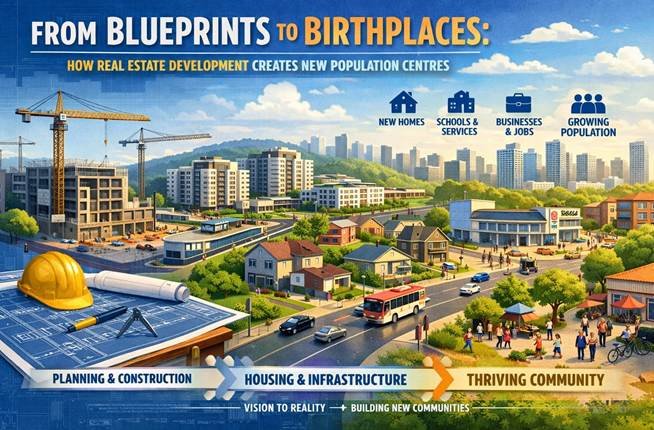
🧭Introduction
Every city, town, or neighborhood once started as an idea on paper. Lines drawn on blueprints eventually became roads, homes, schools, and marketplaces. In 2026, real estate development continues to play a crucial role in transforming empty land into living, breathing population centers where people build lives, families, and futures.
This journey—from blueprints to birthplaces—explains how real estate development doesn’t just shape land, but directly influences population growth and human settlement.
📐The Beginning: Blueprints and Vision
The creation of a population center begins long before people arrive. It starts with planning.
Urban planners, developers, and governments identify land with potential and design:
- Residential layouts
- Road networks
- Utility systems
- Public spaces
These blueprints reflect more than construction plans—they represent future communities. In 2026, smart planning focuses on livability, sustainability, and long-term growth rather than short-term expansion.
💼Development Creates Opportunity
Once development begins, opportunity follows.
Real estate projects generate employment for:
- Construction workers
- Engineers and architects
- Local suppliers and service providers
Jobs attract people. As workers move closer to these opportunities, temporary settlements turn into permanent residences. Economic activity becomes the first driver of population growth.
🏡Housing Turns Land into Home
Land alone does not increase population—housing does.
When residential projects are developed:
- Families relocate for affordable living
- Professionals move closer to work hubs
- Migrants find stability and security
In 2026, rising urban congestion pushes people toward newly developed areas, where modern housing and better quality of life are available. Over time, these areas become preferred places to settle.
🚆Infrastructure Builds Confidence
People don’t move where survival is difficult. Infrastructure is what transforms real estate into a population magnet.
Developed land with:
- Roads and transport
- Water and electricity
- Internet connectivity
- Schools and healthcare
creates confidence. Families feel safe investing their lives there. This sense of reliability encourages long-term settlement and steady population growth.
🤝From Settlement to Community
As population increases, communities form naturally.
Markets open.
Schools expand.
Healthcare centers grow.
Social bonds strengthen.
Children are born, raised, and educated in these areas—turning once-empty land into birthplaces, both literally and symbolically. What began as a real estate project becomes a living society.
🌆The 2026 Perspective: Smarter Population Centers
In 2026, population growth is no longer about overcrowding cities. It’s about balanced expansion.
Modern real estate development focuses on:
- Satellite towns
- Suburban growth
- Sustainable housing
- Human-centered design
These new population centers reduce pressure on major cities while offering healthier lifestyles.
📊Why This Matters
Understanding how real estate creates population centers helps governments, investors, and citizens make better decisions.
Planned development leads to:
- Controlled population growth
- Economic stability
- Improved quality of life
- Stronger communities
Unplanned growth, on the other hand, leads to congestion and inequality. The difference lies in how land is developed.
🏁Conclusion
From the first blueprint📐 to the first newborn👶, real estate development quietly shapes human movement and settlement. In 2026, land is more than property—it’s the foundation of future generations.🌍.
Every road built, every home constructed, and every neighborhood planned contributes to where people choose to live, grow, and belong. Real estate doesn’t just build structures.🏗️.
It builds population centers, communities, and futures.🔮.
🚀Call to Action
If you’re a developer, investor, planner, or landowner, the choices you make today will shape tomorrow’s communities.
👉 Invest in thoughtful land development
👉 Support sustainable real estate projects
👉 Plan spaces that people can truly call home
Because the next population center doesn’t start with people—it starts with a vision.