

 Vachana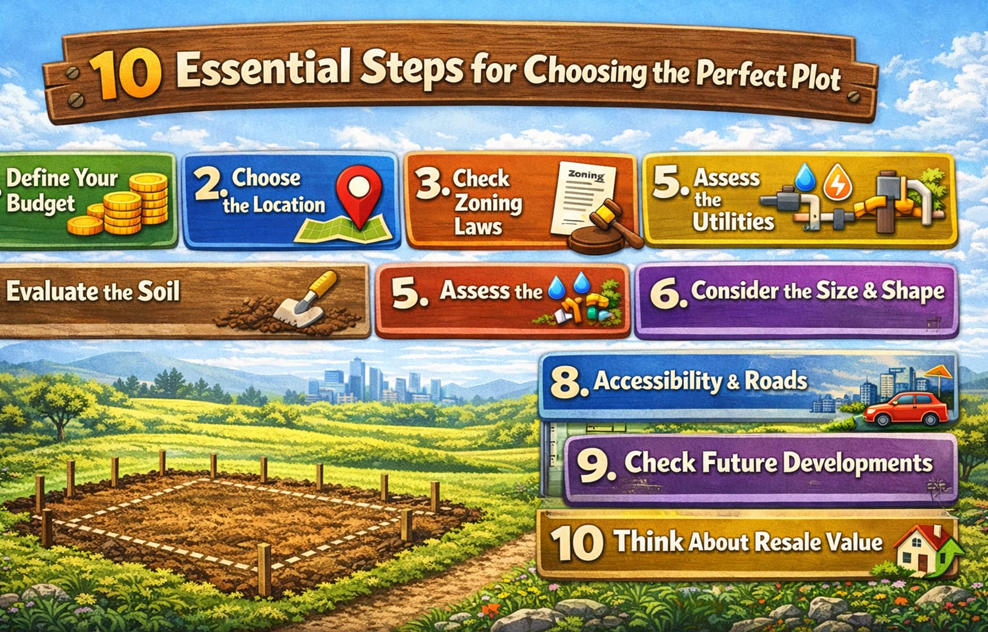
10 Plan for Future Growth
Think long-term. Check upcoming infrastructure projects, buying a plot of land is one of the most significant decisions you can make, whether you’re planning to build your dream home, invest, or start a commercial project. The right plot can set the foundation for your future, while a wrong choice can lead to long-term headaches. Here’s a step-by-step guide to help you choose the perfect plot with confidence.
1. Determine Your Purpose
Before even stepping foot on a property, clarify why you are buying the plot. Are you building a residential home, a commercial building, or looking for an investment? The purpose will guide your priorities, including location, size, and amenities. For example, a plot for a family home may prioritize neighborhood safety and schools, while a commercial plot focuses on accessibility and foot traffic.
2. Set a Realistic Budget
Knowing your budget is crucial. Factor in not just the plot cost but also additional expenses like legal fees, registration charges, and future construction costs. Avoid overstretching financially; a plot that drains your resources may create stress down the line. Always leave a buffer for unexpected expenses.
3. Choose the Right Location
Location is often the most critical factor. Consider proximity to work, schools, hospitals, markets, and public transport. Check if the area has potential for future growth and whether it’s prone to natural hazards like flooding. Remember, a well-located plot can appreciate in value significantly over time.
4. Check Zoning and Land Use Regulations
Local government regulations dictate what can be built on a plot. Confirm the zoning laws, permissible building types, and restrictions. If you’re buying for commercial purposes, ensure the area allows business operations. Violating zoning rules can result in hefty fines or legal complications.
5. Assess Accessibility
A plot that’s difficult to access can cause daily inconvenience and reduce resale value. Check road connectivity, availability of public transport, and proximity to main highways. Accessibility also matters for construction materials delivery if you plan to build.
6. Evaluate Topography and Soil Quality
The physical characteristics of a plot are vital. A flat plot with stable soil is ideal for construction and can save significant costs. Avoid plots in low-lying areas prone to waterlogging or with rocky terrain that requires extensive leveling. Soil testing is especially important if you plan to build a large structure.
7. Inspect Legal Clearances
Never skip legal verification. Ensure the plot has a clear title, no pending disputes, and all taxes are paid. Check for land encumbrances, previous ownership records, and government approvals. Hiring a real estate lawyer for this step can save you from future complications.
8. Check Utilities and Infrastructure
A plot may look perfect, but if basic utilities aren’t available, it could be a problem. Confirm the availability of water, electricity, sewage, internet, and drainage. Proximity to hospitals, schools, and markets also adds long-term convenience and value.
9. Analyze Neighborhood and Community
Visit the area at different times of the day to assess the environment. Look for noise levels, cleanliness, security, and overall community vibe. A safe, friendly, and well-developed neighborhood enhances your living experience and future resale value.
planned commercial hubs, or public transport expansions near the area. A plot in a developing zone may cost more initially but can appreciate significantly in the future. Conversely, areas that seem fully developed may not offer much growth potential.
Conclusion
Choosing the perfect plot is not just about finding a piece of land—it’s about securing your future. By carefully considering purpose, budget, location, legalities, and future prospects, you can make a decision that brings peace of mind and long-term value. Remember, a well-chosen plot is the first step toward building your dreams, whether it’s a home, an investment, or a thriving business.