

 Vachana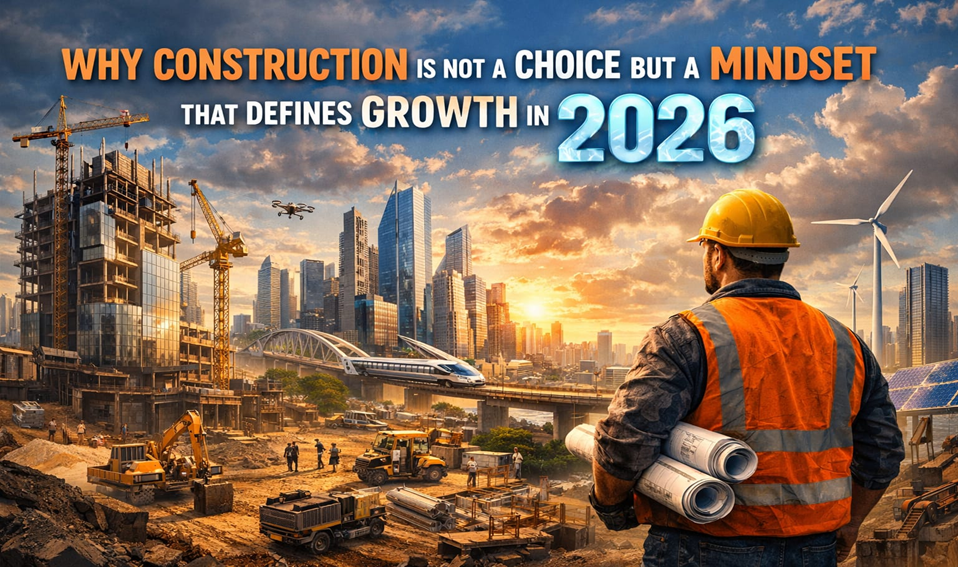
In 2026, construction is no longer just an industry or a technical process. It has evolved into a mindset — a way of thinking that defines how individuals, investors, and societies approach growth, stability, and the future. While buying finished properties was once considered the safest option, a clear shift is taking place. People no longer want to simply own space; they want to create it.
This shift reveals something deeper than market trends. It reflects a fundamental human instinct — the desire to build, control, and leave a lasting mark. In today’s world, construction is not a backup plan or an optional step. It is a mindset that separates passive ownership from active growth.
🔴The Shift from Buying to Building
For years, real estate decisions were driven by convenience. Ready-made homes, commercial spaces, and pre-built projects dominated the market. But in 2026, this mindset is changing rapidly.
People are realizing that buying something already built limits flexibility, creativity, and long-term value. Construction, on the other hand, offers control — over design, function, cost efficiency, and future expansion. Whether it’s residential housing, commercial infrastructure, or mixed-use developments, building from the ground up allows individuals and businesses to align property with their exact needs.
This shift is not accidental. It is driven by rising land awareness, evolving lifestyles, and the understanding that true growth begins at the foundation level.
🔴Construction as a Human Instinct
At its core, construction connects deeply with human psychology. Since the earliest civilizations, humans have been builders. From shelters to cities, progress has always been defined by the ability to transform land into structure.
In 2026, this instinct is resurfacing strongly. Owning land and constructing on it provides a sense of security, identity, and achievement. It is not just about walls and roofs — it is about creating something permanent in an uncertain world.
This is why construction feels powerful. It gives people a sense of control in a fast-changing digital era where many things feel temporary. Building something tangible restores confidence and purpose.
🔴Why Construction Is a Mindset, not a Decision
A decision can be delayed, avoided, or reversed. A mindset cannot.
People who think with a construction mindset view land differently. They don’t see empty plots as idle assets; they see potential. They don’t wait for perfect market conditions; they plan long-term. They understand that growth takes time, structure, and vision.
In 2026, this mindset is what defines successful investors, developers, and even homeowners. They are not reacting to trends — they are shaping them. Construction thinkers focus on value creation rather than short-term gains. This mindset also embraces responsibility. Building means planning, compliance, sustainability, and future readiness. Those who adopt this thinking are naturally positioned for long-term growth.
🔴Land, Construction, and Control in 2026
Land ownership alone is no longer enough. In many markets, undeveloped land without a clear construction vision remains underutilized. The real value is unlocked when land meets intention.
Construction turns land into income, utility, and legacy. A constructed asset generates economic activity, supports communities, and adapts to future demands. In 2026, with increasing urbanization and infrastructure needs, construction-driven land development is becoming the strongest growth strategy.
Those who control both land and construction control outcomes — timelines, usage, and returns. This is why construction is increasingly seen as a strategic mindset rather than a technical process.
🔴The Role of Construction in Sustainable Growth
Another reason construction defines growth in 2026 is sustainability. Modern construction focuses on smart design, efficient materials, and long-term environmental impact. People want buildings that are adaptable, energy-efficient, and future-ready.
This requires thinking beyond today’s needs. It requires a mindset that asks: How will this structure serve tomorrow? That question alone separates builders from buyers.
Construction-minded individuals understand that sustainable growth is planned, not purchased.
🔴Builders Will Lead the Future
History is clear on one thing: societies grow when builders lead. Roads, homes, industries, and cities exist because someone chose to build instead of wait.
In 2026, the same principle applies on an individual level. Those who adopt the construction mindset are not just investing in property — they are investing in influence, stability, and long-term relevance.
They are creating assets that last, adapt, and grow.
🔴Conclusion
Construction in 2026 is not about necessity or compulsion. It is about perspective.
It is the mindset of people who see land as opportunity, planning as power, and building as progress. It is the belief that growth does not happen by chance — it is constructed, step by step, from the ground up.
In a world full of ready-made solutions, those who choose to build will always stand apart. Because construction is not a choice anymore.
It is the mindset that defines growth