

 Vachana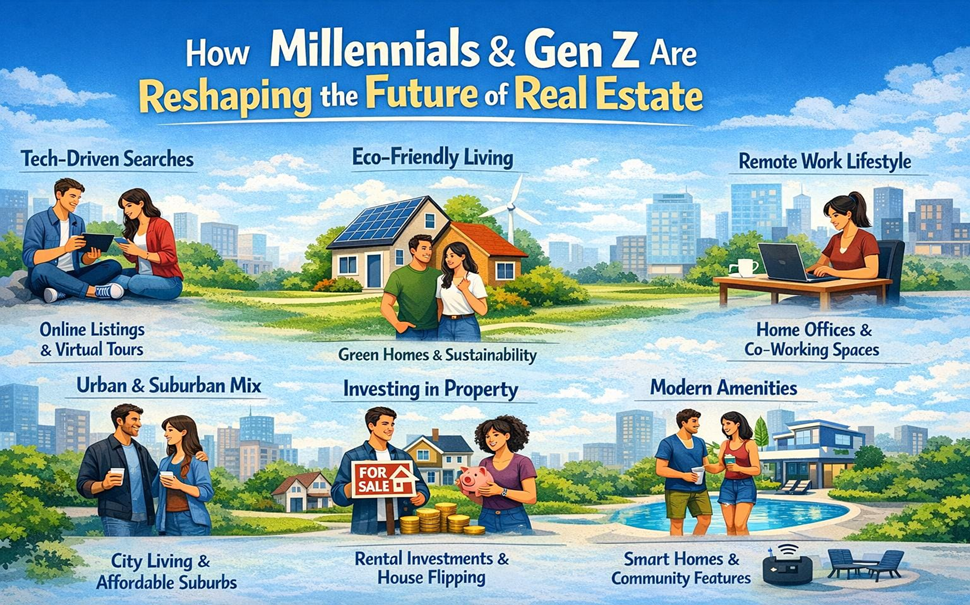
The real estate industry is undergoing a major transformation, and at the center of this change are Millennials and Gen Z. Unlike previous generations, these younger buyers, renters, and investors are redefining how properties are searched, purchased, rented, and even designed. Their preferences, values, and digital habits are not temporary trends — they are shaping the future of real estate.
1. A Digital-First Approach to Real Estate
Millennials and Gen Z are true digital natives. They expect speed, transparency, and convenience in every transaction. Traditional methods such as newspaper listings, in-person-only viewings, and paper-heavy processes are rapidly being replaced by:
- Online property platforms
- Virtual tours and video walkthroughs
- Digital contracts and e-signatures
- Social media–driven property marketing
For this generation, if a property isn’t visible online, it almost doesn’t exist.
2. Changing Priorities in Homeownership
Older generations viewed homeownership as a lifelong goal and a symbol of stability. Millennials and Gen Z, however, prioritize flexibility and lifestyle over long-term ownership. Factors such as rising property prices, student debt, and economic uncertainty have reshaped their expectations.
Many are willing to:
- Rent longer instead of buying early
- Choose smaller, more affordable homes
- Live closer to work, entertainment, and social spaces
- Relocate easily for career opportunities
This shift is influencing urban planning and residential development worldwide.
3. The Rise of Renting and Alternative Living Models
Renting is no longer seen as a temporary phase. Millennials and Gen Z are embracing:
- Long-term renting
- Co-living spaces
- Flexible lease agreements
- Mixed-use developments
These models offer affordability, community, and adaptability — qualities that resonate strongly with younger generations. As a result, rental markets are expanding, and developers are adjusting their strategies to meet this demand.
4. Sustainability and Values-Driven Decisions
One of the most defining traits of Millennials and Gen Z is their focus on sustainability and social responsibility. They actively seek properties that align with their values, including:
- Energy-efficient homes
- Eco-friendly materials
- Smart energy systems
- Sustainable community planning
Green buildings are no longer optional extras; they are becoming a standard expectation in modern real estate.
5. New Ways of Investing in Real Estate
Younger generations are also changing how people invest in property. Instead of traditional full ownership, they are exploring:
- Real estate crowdfunding
- Fractional ownership
- REITs and digital investment platforms
These options lower entry barriers and make real estate investing more accessible, especially for first-time investors.
6. Impact on Real Estate Professionals and Developers
For real estate agents, investors, and developers, this generational shift means adaptation is essential. Success now depends on:
- Strong online presence and digital marketing
- Transparency and data-driven insights
- Flexible property offerings
- Sustainable and smart designs
Those who fail to evolve risk losing relevance in a rapidly changing market.
Conclusion
Millennials and Gen Z are not just influencing real estate — they are reshaping it permanently. Their demand for technology, flexibility, sustainability, and value-driven living is pushing the industry toward a more modern, inclusive, and efficient future.
As these generations continue to grow in economic power, their impact on real estate will only deepen. Understanding their needs today is the key to thriving in the real estate market of tomorrow.