

 Vachana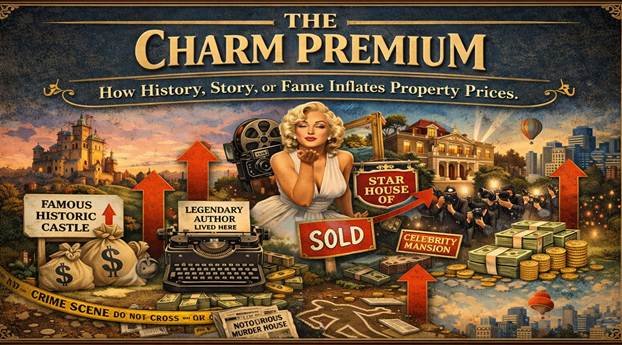
When it comes to real estate, most buyers focus on location, size, and modern amenities. But sometimes, a property’s price isn’t just about square footage or facilities—it’s about story, history, and charm. This invisible boost in value is what experts call the “charm premium.”
Whether it’s a century-old mansion, a celebrity-owned villa, or even a haunted house, the charm premium shows that humans don’t just buy property—they buy a story.
What Is the ‘Charm Premium’?
The charm premium is the extra value a property commands because of its unique history, fame, or emotional appeal, rather than its physical features.
In other words: the more intriguing or prestigious the story behind a property, the higher its price can go.
- A modern house in a new suburb might cost $200,000.
- A 100-year-old historic house in the same area might cost $350,000—even if the structure needs renovation—simply because of its history.
It’s not magic. It’s psychology, storytelling, and prestige rolled into one.
Examples of the Charm Premium in Action
1. Historic Houses
Properties with a past—like colonial-era mansions or century-old villas—often attract history lovers and collectors. People pay more for a sense of heritage, even if the house isn’t fully modernized.
Example: A heritage bungalow in Kolkata’s Park Street area sells for much higher than a newly built house of the same size simply because of its architectural style and legacy.
2. Celebrity Connections
Who lived there can matter as much as the house itself. Properties once owned by actors, writers, or politicians often carry a huge premium.
Example: Homes previously owned by movie stars or authors often sell for double or triple the standard market price, purely because buyers want a slice of that fame.
3. Haunted or Legendary Properties
Oddly enough, even properties with a reputation for being haunted ormysterious can fetch higher prices. Why? People love a story, and some buyers are drawn to the novelty, exclusivity, or even tourism potential.
Example: Certain historic mansions in India, Europe, or the US are marketed with their legends, attracting tourism businesses or curious buyers, pushing their value up.
4. Landmarks and Famous Locations
Even empty land can benefit from the charm premium. Plots near famous streets, iconic buildings, or historical landmarks often cost more than nearby plots without any story.
Why: It’s not just location; it’s prestige, social proof, and bragging rights.
Why Buyers Pay Extra for Charm
- Emotional Connection: Humans value stories and memories over bricks and mortar. Owning a piece of history creates pride and status.
- Uniqueness: A property with charm is one-of-a-kind, unlike cookie-cutter developments.
- Investment Appeal: Historic or famous properties often appreciate faster, especially in niche markets.
- Marketing Edge: Unique properties are easier to sell or rent because the story itself adds perceived value.
How Sellers Can Leverage the Charm Premium
If you’re selling a property with history, fame, or a unique story, you can increase its perceived value:
- Highlight the history, famous owners, or architectural uniqueness in your listing.
- Use storytelling in marketing: blogs, videos, or guided tours can make buyers emotionally attached.
- Preserve unique features rather than renovating everything—it keeps the heritage and charm intact.
Even small touches, like keeping original doors, flooring, or facades, can justify a higher price than a similar modern property.
Final Thoughts
The charm premium proves that real estate isn’t just numbers—it’s emotion, perception, and story. Buyers often pay extra for something that feels special, historic, or prestigious, even if it’s not the newest or biggest property on the market.
For sellers, this is an opportunity to market uniqueness as a value. For buyers, it’s a reminder: sometimes, you’re not just buying property—you’re buying a piece of history, fame, or legend.
So next time you see an old mansion, a celebrity home, or a property with a story, remember: the charm premium might be silently inflating its price—and that’s part of the magic of real estate.