

 Vachana
 Investing in land can be highly profitable—but climate plays a huge role in determining its long-term value. Understanding these factors helps you pick land that’s both usable and desirable.
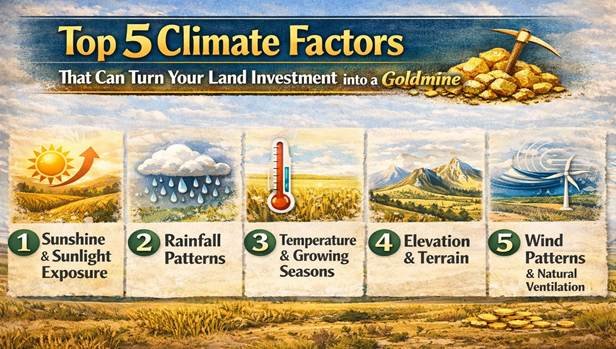
1. Sunshine & Sunlight Exposure ☀️
Key Points:
- Look for areas with consistent, abundant sunlight (6–8 hours/day).
- South-facing slopes (northern hemisphere) maximize exposure.
Pros:
- Ideal for agriculture and solar energy projects.
- Enhances appeal for residential and recreational developments.
Cons:
- Too much heat may require irrigation or cooling solutions.
2. Rainfall Patterns 🌧️
Key Points:
- Moderate, predictable rainfall is best.
- Avoid flood-prone areas unless mitigated.
Pros:
- Supports fertile soil and agriculture.
- Reliable water for crops, livestock, or gardens.
Cons:
- Too little rain requires irrigation.
- Excessive rain may cause erosion or waterlogging.
3. Temperature & Growing Seasons 🌡️
Key Points:
- Mild, stable climates with long growing seasons are ideal.
- Match temperature to intended land use (farming, housing, recreation).
Pros:
- Longer agricultural productivity.
- Comfortable for residents and recreational use.
Cons:
- Extreme heat or cold can limit usability.
- May increase heating/cooling costs.
4. Elevation & Terrain 🏔️
Key Points:
- Slightly elevated land reduces flood risk.
- Hilly terrain offers scenic views and premium value.
Pros:
- Lower flood risk.
- Attracts high-value buyers for residential or vacation properties.
Cons:
- Steep slopes increase development costs.
- Infrastructure (roads, utilities) may be more expensive.
5. Wind Patterns & Natural Ventilation 🌬️
Key Points:
- Look for steady, moderate winds without extreme storms.
- Natural airflow benefits agriculture and energy projects.
Pros:
- Reduces heating/cooling costs.
- Good for crops, livestock, and wind energy opportunities.
Cons:
- Strong winds can damage structures or crops.
- Coastal winds may require reinforced buildings.
Conclusion
By focusing on sunlight, rainfall, temperature, elevation, and wind, you can choose land that’s productive, profitable, and resilient. Smart climate-aware investments turn ordinary plots into goldmine opportunities.